Walk into almost any new hotel and you will see glass at the edges: around the lobby mezzanine, along the grand stair, on guest balconies and beside the pool. Glass keeps views open and makes spaces feel bigger. However, a hotel glass railing works much harder than a railing at home. Thousands of guests lean on it, luggage trolleys bump it, and housekeeping cleans it every day. At UNIKIM we supply stainless steel glass railing hardware from our Ningbo factory to contractors and distributors who build hotel projects, so we see what lasts and what fails. This guide covers where glass railing goes in a hotel, which codes apply, and how to choose hardware that still looks right after years of use.
Where hotels use glass railing
Hotels use glass railing in more places than most building types. Each area has its own loads, finishes and risks, so it helps to look at them one by one.
Lobbies and mezzanines. This is the showpiece. Designers want thin lines, clear views and a finish that matches the interior. Because crowds gather here, guards often see the highest everyday loads.
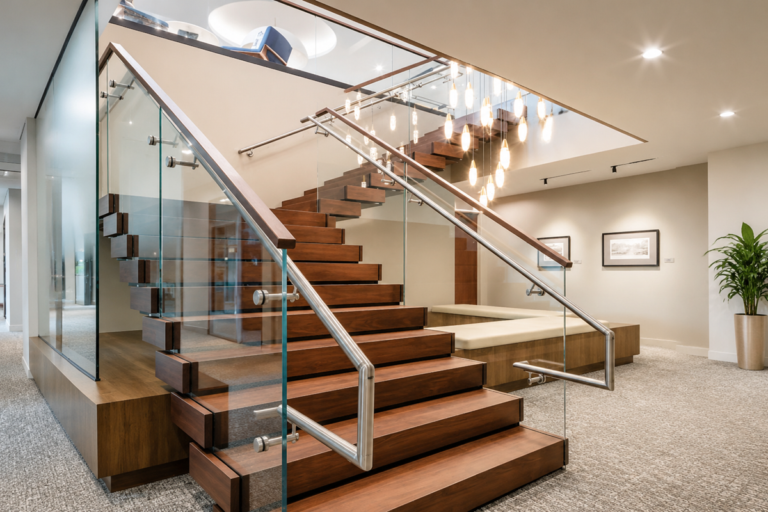
Grand stairs. A feature stair needs a guard on the open side and a handrail people can grip. Glass guards with a separate stainless handrail are common.
Atriums. Multi-storey atriums put glass guards at every floor edge. As a result, consistency across levels becomes a big issue.
Guest balconies. Every room balcony needs a guard. Since one tower can have hundreds of identical balconies, small cost and lead-time choices multiply quickly.
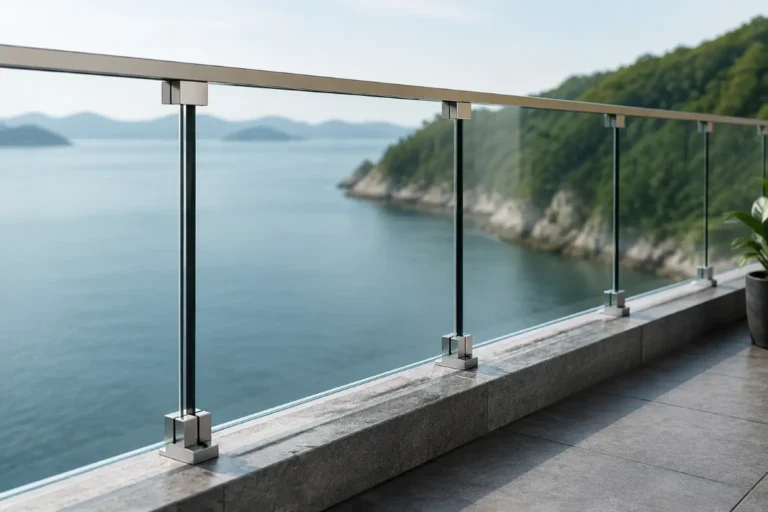
Pool decks and rooftop bars. These areas face sun, wind, chlorine and sometimes sea air. Here, material grade matters more than anywhere else.
Hotel glass railing codes you need to know
Hotels are commercial buildings, so the commercial rules apply. In the United States, the International Building Code sets the main requirements. Other countries use similar ideas with their own numbers.
Guard height and openings
The IBC section 1015 on guards generally requires guards where a floor edge is more than 30 in (762 mm) above the level below. In commercial buildings, guards are usually at least 42 in (1,067 mm) high, and openings must not let a 4 in (102 mm) sphere pass. Our guide to guardrail height requirements explains how to measure height on floors and stairs.
Glass in guards
The IBC section 2407 on glass in handrails and guards is the key rule for any hotel glass railing. In short, glass in a guard generally has to be laminated glass made of fully tempered or heat-strengthened glass. The glass must also be designed with a high safety factor. Where the glass has no top rail, the code adds further conditions on the laminated glass. For a plain-English summary, see our article on glass railing code requirements.
Loads
Guards in hotels must resist a concentrated load and a line load at the top, set by the structural chapter of the code. Crowded lobbies and bars are exactly where those loads are real. For that reason, the anchor design and the slab edge need as much attention as the glass. Our guide to glass railing load requirements walks through the numbers.
Choosing a hotel glass railing system
There are four main ways to hold the glass. Each suits different parts of a hotel.
| System | How it holds the glass | Best hotel areas | Points to watch |
|---|---|---|---|
| Aluminum base shoe | Continuous channel at the floor | Lobbies, atriums, long straight runs | Needs a strong slab edge; cover finish must match interior |
| Glass spigots | Posts at the base, about 2–3 per panel | Pool decks, terraces, rooftop bars | Use AISI 316 near pools and the sea |
| Standoffs | Pins through the glass into the slab edge | Feature stairs, mezzanine edges | Holes need careful glass processing |
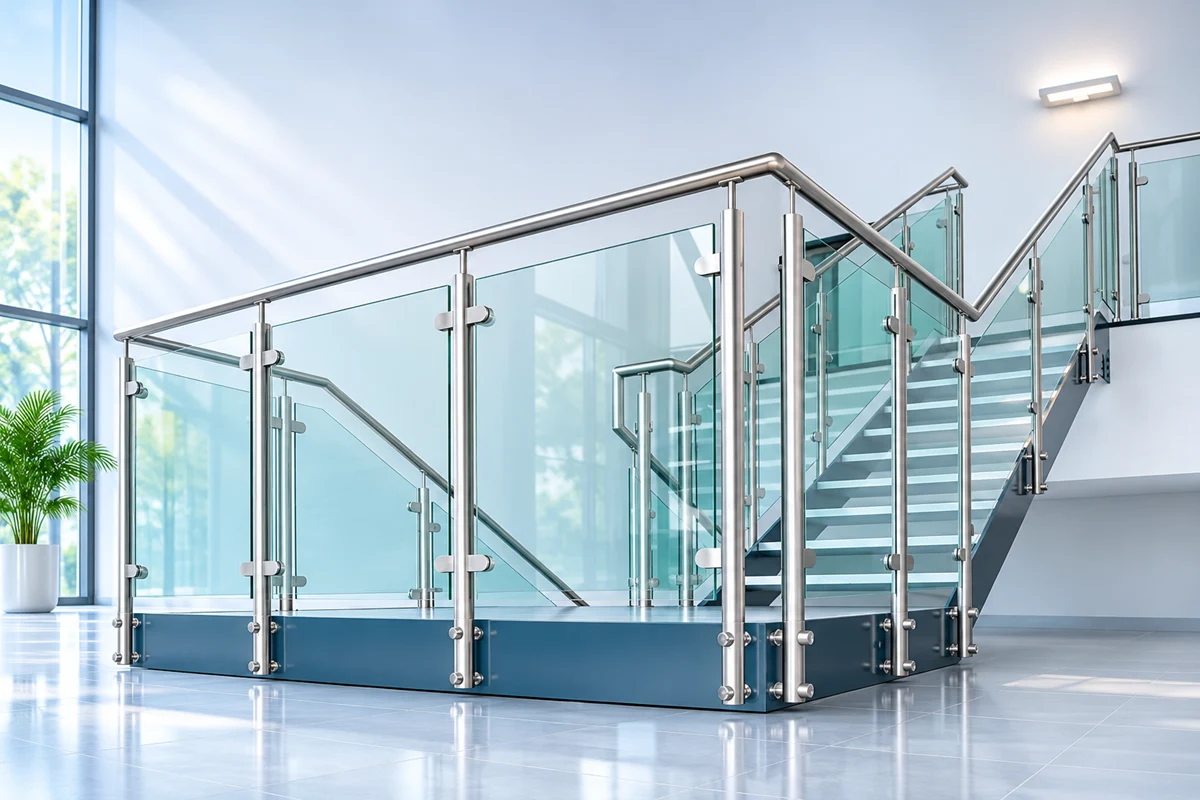
| Posts with glass clamps | Stainless posts with clamps holding panels | Guest balconies, back-of-house stairs | More metal in view; easy to replace panels |
Base shoe for lobbies and atriums
A continuous aluminum base shoe gives the cleanest look, with no posts and no visible fixings. That makes it a favourite for a hotel glass railing in the lobby. It also spreads load along the slab, which helps on long runs. The cover cladding can be stainless, brushed or coloured to suit the interior.
Spigots for pool decks and terraces
Glass spigots work well outdoors because they drain freely and are easy to clean around. Near pools, choose AISI 316 and a smooth finish. Our article on pool chemicals and glass spigots explains why chlorine and salt change the choice.
Standoffs for feature edges
Glass standoffs fix the glass to the face of the slab. This keeps the floor clear and makes the glass appear to float. Designers often use them on the open edge of a grand stair. Read spigot vs standoff glass railing for a full comparison.
Posts and clamps for guest balconies
On hundreds of identical balconies, a post and clamp system can be the practical choice. Panels are smaller and lighter, so they are easier to lift and replace. In addition, a broken panel can be swapped without disturbing the whole run.
Handrails on hotel glass railing
A hotel glass railing often needs a handrail too. Stairs need handrails on both sides for accessibility, and many designers also add a top rail to a glass guard for extra safety.
A slot tube handrail caps the top edge of the glass and ties the panels together. If one panel breaks, the rail helps keep the run in place. Our round slot tube handrail is a common choice for lobby guards.
On stairs, the handrail must also meet accessibility rules for height, grip and clearance. In practice, that often means a separate round handrail fixed to the glass or the wall with brackets. Our guide to handrail height requirements covers the details.
Finishes and branding in hospitality
Hotels care about finish more than most clients, and a hotel glass railing is touched all day. A brand may specify brushed stainless in one property and black or brass tones in another. Because of that, the finish decision should come early, not at the end.
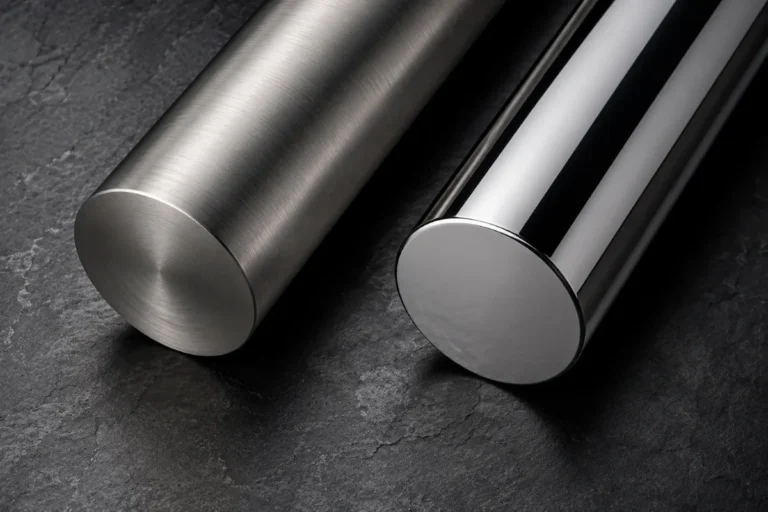
Brushed and satin stainless. These finishes hide fingerprints and light scratches. They suit public areas where guests touch the hardware all day.
Mirror polish. This looks rich in a lobby. However, it shows every print, so housekeeping must clean it often.
PVD colours. Black, gold and bronze PVD on stainless steel give hotels a branded look. Still, PVD cannot be repaired on site, so plan for spare parts.
For a full comparison of options, read our guide to stainless steel railing finishes.
[Image: hotel lobby mezzanine with frameless glass railing and brushed stainless top rail]
Glass choices for a hotel glass railing
The glass itself shapes both safety and looks. Here are the main choices for hotel projects.
Laminated tempered glass. This is the standard for guards, because the interlayer holds the pieces together if the glass breaks. Common build-ups include two plies of 8 mm or 10 mm, depending on the system and the span.
Low-iron glass. Standard glass has a slight green edge. Low-iron glass looks clearer and whiter, which many hotel designers prefer in lobbies.
Stiff interlayers. For frameless guards without a top rail, a stiff structural interlayer helps the glass stay in place after breakage.
For the basics of laminated and tempered glass, see our article on laminated vs tempered glass.
Installation and maintenance in a working hotel
Many hotel projects are renovations. The building stays open, so installers must work in phases with little noise and dust. Therefore, pre-cut glass and pre-assembled hardware save a lot of time on site.
Maintenance matters just as much. Housekeeping cleans every hotel glass railing daily, often with strong products. Ask your supplier which cleaners are safe for the finish. Above all, keep chloride cleaners and bleach away from stainless steel, and rinse pool areas with fresh water.
Spare parts are the other detail people forget. A hotel cannot leave a broken panel or a missing cap on show for weeks. For that reason, many owners keep a small stock of glass, gaskets, caps and clamps on site.
What drives the cost of a hotel glass railing
Hotel budgets are tight, and railing is a visible line item. Prices vary widely by country and project, so it is more useful to know what moves the number than to chase a single figure. These are the main cost drivers we see.
The system. A continuous base shoe uses more aluminum and needs a strong slab edge. Spigots and standoffs use less metal but need more holes and careful setting out. Posts with clamps usually cost least per metre.
The glass. Laminated glass costs more than single tempered glass, and low-iron glass adds more again. Thicker plies and stiff interlayers raise the price further. However, the glass is not the place to save money, because the code sets the minimum.
The finish. Brushed stainless is the standard. Mirror polish takes more labour, and PVD colours add a separate process. On a hotel with hundreds of balconies, that difference adds up quickly.
Repetition. This is where hotels can save. When every guest balcony uses the same panel size and the same hardware, the factory can run one long batch. As a result, unit prices fall and quality stays more even. Therefore, ask the architect to standardise balcony widths early, before the hotel glass railing goes out to tender.
Site conditions. Renovations in an open hotel cost more to install than a new build. Night work, phasing and protection of finished areas all add labour.
For typical price ranges per foot, see our guide to glass railing cost per linear foot.
What to ask your hotel glass railing supplier
Before you order, ask these questions. Good suppliers answer them quickly and in writing.
- Which grade is each part: AISI 304 or 316?
- Has the system been designed or tested for the guard loads in your code?
- Can they supply matching finishes across all floors and phases?
- What is the lead time for spares after handover?
- Can they make parts to your drawings for a branded look?
Our commercial glass railing systems guide includes a longer supplier checklist, and our glass railing specification article shows how to write it into a spec.
Why work with UNIKIM
UNIKIM has made stainless steel railing hardware in Ningbo, China, for more than 20 years. We supply glass spigots, standoffs, glass clamps, slot tube handrails, posts and fittings in AISI 304 and 316 to contractors and distributors worldwide. We also produce OEM parts and special finishes for branded projects. You can see our factory and products on the UNIKIM Made-in-China store, or browse our frameless glass railing systems.
FAQ
In most US projects, glass in a guard must be laminated glass made from fully tempered or heat-strengthened plies, under IBC section 2407. The interlayer holds broken pieces together and helps keep the guard in place. A hotel glass railing without a top rail needs extra checks on the laminated glass. Always confirm the build-up with the glass engineer.
Hotels are commercial buildings, so guards are usually at least 42 in (1,067 mm) high under the IBC. Openings must not pass a 4 in sphere. Some countries and local codes set different heights, so check the code where the hotel stands. A hotel glass railing on a stair also needs a separate handrail at the right height.
Both work. Aluminum base shoes are common for long frameless runs in lobbies. Stainless steel suits spigots, clamps, standoffs and handrails, because it is strong and easy to clean. Near pools or the sea, choose AISI 316. Many hotel glass railing designs combine an aluminum base shoe with stainless steel caps and handrails.
Yes. Stainless hardware can be brushed, satin, mirror polished or PVD coated in colours such as black or gold. Ask for physical samples and approve one master finish for the whole project. Order spares in the same batch, because colour can vary slightly between batches. This keeps a hotel glass railing consistent across floors and phases.
Use mild soap and water or a glass cleaner without chlorides on the glass, and wipe stainless parts along the grain with a soft cloth. Avoid bleach and strong acids. Rinse pool and coastal areas with fresh water often. A simple daily routine keeps a hotel glass railing clear and stops brown marks on the hardware.
Summary
A hotel glass railing has to look elegant and work hard every day. Choose the system for each area: base shoe in lobbies, spigots by the pool, standoffs on feature edges and posts with clamps on balconies. Follow the IBC rules for guard height, laminated glass and loads. Pick finishes early, use AISI 316 outdoors, and plan spares before handover. UNIKIM manufactures glass railing hardware for hospitality projects around the world. To discuss your hotel project, contact our team.