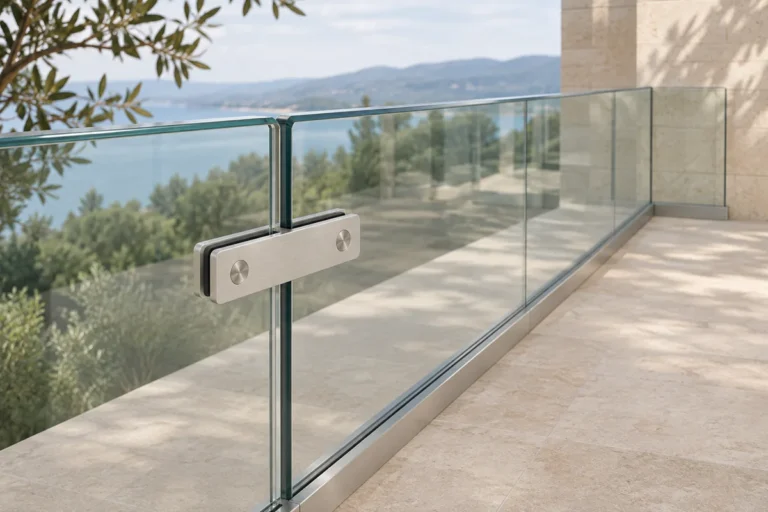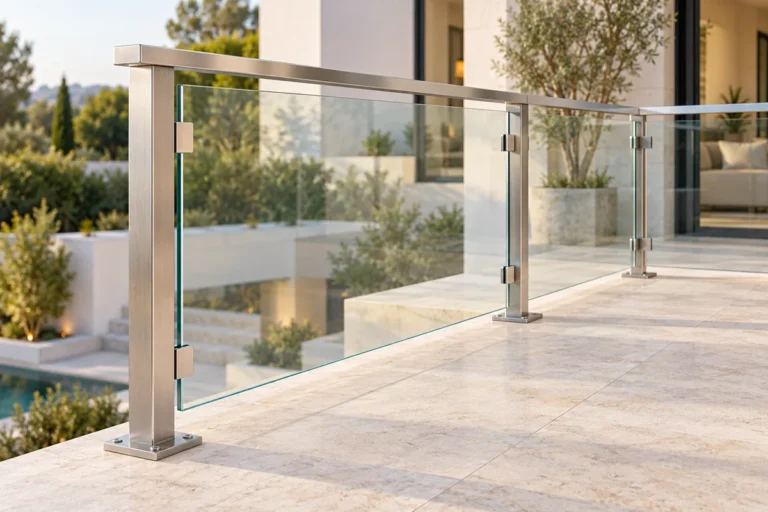

Canopy glass is a specialized type of glass used in architectural and construction projects to create protective overhead structures. These structures, often referred to as glass canopies, provide shelter while allowing natural light to pass through, enhancing both functionality and aesthetics. Commonly used in commercial buildings, residential properties, and public spaces, canopy glass combines durability, safety, and modern design.
At Urailing, we specialize in high-quality canopy systems that integrate seamlessly with modern architecture. Whether for stainless steel railing systems or standalone glass structures, our solutions ensure safety, elegance, and longevity.
What is Canopy Glass Made Of?
Canopy glass is typically manufactured using tempered or laminated glass, both of which offer enhanced strength and safety.
- Tempered Glass – Heat-treated to be four to five times stronger than regular glass. If broken, it shatters into small, blunt pieces, reducing injury risks.
- Laminated Glass – Consists of multiple layers bonded with a PVB interlayer, providing extra security and sound insulation.
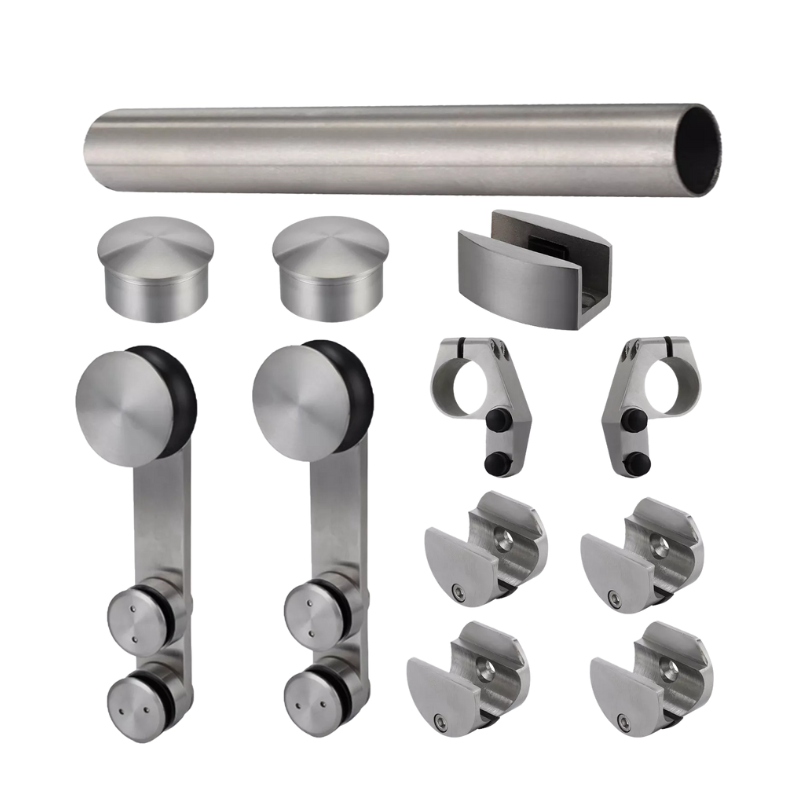
For added durability, some canopy glass structures incorporate stainless steel framing, ensuring stability and resistance to harsh weather conditions. Explore our Canopy System products for premium solutions.
Types of Canopy Glass Structures
Canopy glass comes in various designs, each serving different architectural needs:
- Freestanding Glass Canopies – Ideal for entrances, patios, and walkways, offering protection without obstructing views.
- Attached Glass Canopies – Fixed to buildings, providing shelter over doorways and balconies.
- Retractable Glass Canopies – Adjustable structures that can be opened or closed based on weather conditions.
- Curved Glass Canopies – Custom-designed for a sleek, modern appearance, often used in luxury buildings.
For more on how glass integrates with metal structures, check our guide on Stainless Steel Railing Systems.
Why Use Canopy Glass? Major Benefits Unpacked
Let’s talk perks. There’s a good reason why more and more architects and homeowners are jumping on the glass canopy trend.
Visual Appeal with Modern Flair
There’s no denying it—glass canopies scream luxury. Their sleek, transparent look gives buildings a modern edge, seamlessly blending with concrete, wood, or steel exteriors.
Natural Light Access
Unlike metal or wood canopies, glass lets natural daylight shine through, reducing the need for artificial lighting underneath and maintaining an open, airy feel.
Weather Protection
It’s not all about looks. Glass canopies are great at shielding entrances and pathways from rain, snow, and direct sunlight, protecting not just people but also exterior elements like doors and signage.
Durability and Safety
Tempered or laminated glass can withstand heavy wind loads, hail, and thermal stress. Combined with stainless steel hardware, it’s a structure built to last.
Eco-Friendly
Using Low-E glass improves a building’s thermal insulation, reducing HVAC loads and cutting down on energy bills.
Real-Life Applications of Canopy Glass
Luxury hotels and commercial plazas don’t exclusively use glass canopies. You’ll find them popping up in everyday settings too:
- Residential Homes: Over front doors, patios, or balconies.
- Office Buildings: Entryways, outdoor walkways, even over parking zones.
- Shopping Centers: Covering walkways and outdoor dining areas.
- Hospitals & Airports: Ensuring weather protection for high-traffic zones.
- Public Transport Stations: Over bus stops or train station platforms.
Need help choosing the right setup for your project? Explore the Urailing Contact Page to get expert advice on tailored solutions.
Tempered or Laminated: Which Glass Belongs Overhead?
Glass over people’s heads has to be judged differently from glass in a wall or a railing. When a single sheet of tempered glass breaks, it falls as hundreds of small pieces. That is safe at ground level, but not over a doorway. Laminated glass behaves differently: two or more sheets are bonded to an interlayer, so broken pieces stay stuck to the film and the panel stays in its fittings until it can be replaced.
Building codes reflect this. In the United States, Section 2405 of the International Building Code (Chapter 24, Glass and Glazing) sets which glass types may be used in sloped and overhead glazing, and when a screen is needed below the glass. Laminated glass is the usual choice for canopies because it stays in place after breakage. Many designers use laminated glass made from two heat-strengthened sheets, because heat-strengthened glass breaks into larger pieces and keeps more stiffness after breakage than laminated fully tempered glass. Our guide on laminated vs tempered glass explains the difference in more detail.
Common Canopy Glass Make-ups
Canopy glass is usually described by its layers, for example “6+6 with 1.52 PVB”. The table shows make-ups often seen on entrance canopies. It is a starting point for discussion, not a design table.
| Make-up | Total thickness | Where it is often used |
|---|---|---|
| 5 mm + 5 mm, 0.76 mm PVB | 10.76 mm | Small canopies over a house door |
| 6 mm + 6 mm, 1.52 mm PVB | 13.52 mm | Typical shop, office and apartment entrances |
| 8 mm + 8 mm, 1.52 mm PVB | 17.52 mm | Larger panels and deeper projections |
| Any of the above with SGP (ionoplast) interlayer | Similar | Frameless canopies with few support points, where a stiffer interlayer helps |
The final thickness must come from a structural calculation for your span, projection, wind, snow and local code. Ask your engineer or glass supplier to confirm it before you order fittings, because the glass thickness decides the clamp and bolt size.
How a Glass Canopy Is Supported
The glass is only half of a canopy. The fittings carry its weight, plus rain, snow and wind, back into the building. Most systems use one of these methods:
- Tie rods: stainless steel rods run from a wall bracket down to the front edge of the glass and hold it up in tension. This is the most common look for entrance canopies.
- Support arms or brackets: solid arms fixed to the wall carry the glass from below, with no rods above.
- Point fittings: glass clamps, patch fittings or spider fittings hold the glass at a few points, often combined with tie rods.
- Wall channel or wall clamps: hold the back edge of the glass at the building face.
All load ends up in the wall, so the wall itself and its anchors must be checked as well. You can compare the options in our guides to stainless steel glass canopy fittings, glass canopy hardware for commercial buildings and how to choose a glass canopy system. For outdoor and coastal sites, choose AISI 316 fittings; our SS304 vs SS316 canopy system article explains why.
Slope, Drainage and Sealing
A canopy that is set dead level holds water, dirt and leaves. Give the glass a small fall away from the building so rain runs off the front edge, not back towards the door. Seal the joint at the wall with a suitable weatherproof silicone, and leave the front edge free so water can drip clear. Where several panels meet, keep an even gap and seal it so water does not run through the joint onto people below.
Cleaning and Inspection
- Clean the glass and the stainless steel parts with mild soapy water, then rinse with fresh water. Near the sea or a pool, rinse more often to remove salt and chlorides.
- Do not use steel wool or chloride bleach on stainless steel. The Australian Stainless Steel Development Association publishes simple care guidance for stainless steel in outdoor use.
- Once a year, check that tie rods are still tight, bolts are secure and the silicone at the wall is intact.
- Replace a cracked laminated panel as soon as possible, even if it is still held in place.
What to Send When You Ask for a Canopy Quote
- Canopy width and projection from the wall, plus the number of panels.
- Glass make-up, if your engineer has already chosen it.
- Wall type: concrete, brick, steel frame or curtain wall.
- Preferred support method: tie rods, arms or point fittings.
- Location: indoor, outdoor, coastal or near a pool, so we can suggest AISI 304 or 316.
- Finish: satin (brushed) or mirror polished.
Send these details through our contact page or browse the canopy system range. UNIKIM makes canopy fittings in its own factory in Ningbo, China.
Clear, Frosted, Tinted or Low-E Glass?
- Clear laminated glass lets in the most daylight and shows off the stainless steel fittings. Dirt and leaves on top are easy to see, so plan for regular cleaning.
- Frosted or translucent interlayers soften the light, hide dirt from below and give privacy over balconies.
- Tinted glass cuts glare and heat under the canopy, useful over south-facing entrances and café seating.
- Low-E or solar-control coatings reflect part of the sun’s heat. They are more common on canopies that join a glazed facade.
The choice of glass does not change the fittings much, but a thicker or heavier make-up does. Confirm the final glass before ordering clamps, rods and brackets.
Conclusion
Canopy glass is a versatile, stylish, and functional solution for modern architecture. From enhancing natural lighting to improving weather resistance, it offers numerous benefits for both residential and commercial spaces.
At Urailing, we provide premium canopy glass systems tailored to your needs. Explore our product range or get in touch for expert advice.
For further reading on railings, visit Wikipedia’s railing guide.
FAQs
What is a canopy glass used for?
Builders and architects mainly use it as a protective and decorative covering over doors, walkways, patios, and building entrances.
Is canopy glass safe in extreme weather?
Yes! When made from tempered or laminated safety glass, it can withstand harsh weather including strong winds and hail.
How long does a canopy glass last?
With proper installation and minimal maintenance, it can last 20–30 years or more.
Can I customize the glass color or type?
Absolutely. Options include clear, frosted, tinted, or patterned glass for privacy and aesthetics.
Where can I buy high-quality canopy glass?
Check out Urailing’s canopy systems for quality solutions and expert guidance.