Canadian decks take a beating. Snow sits on them for months. Road salt drifts in from driveways. Then summer sun bakes every joint. So when you choose glass railing for decks in Canada, looks are only half the job. The hardware must also survive decades of freeze-thaw cycles.
That is why builders, architects, and importers keep asking the same questions. Which system suits which deck? What does it cost per foot? And which stainless steel grade will still look clean after the second winter?
This guide answers those questions in plain terms. We cover system types, glass and metal specs, code basics, costs, and a buying checklist. We also explain how UNIKIM, a factory-direct railing hardware manufacturer, builds parts for cold, wet, and salty sites.
What Is a Glass Railing System for Decks?
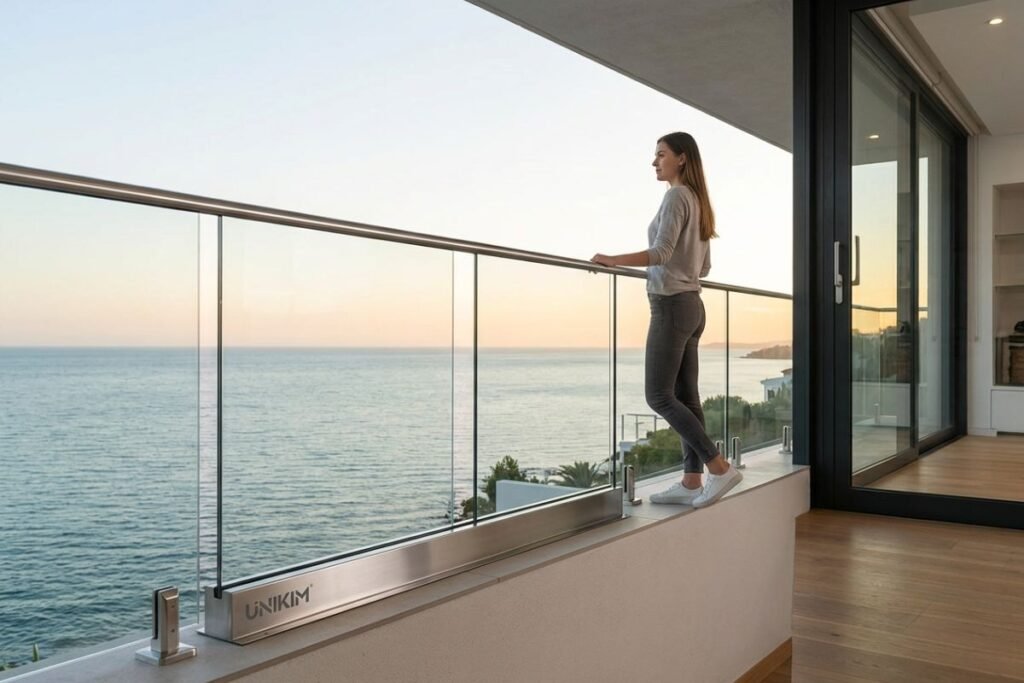
A glass railing system is a deck guard made of safety glass panels held by metal hardware. The panels replace traditional pickets or balusters. As a result, you get an open view with no bars in the way.
Most systems use one of four holding methods:
- Spigots that clamp the glass from below
- Base shoe channels that grip the bottom edge of the glass
- Posts with glass clamps that hold panels at the sides
- Standoffs that bolt the glass to the deck fascia
Each method changes the look, cost, and installation work. So picking the right one early saves money later.
Why Glass Railing Works Well on Canadian Decks
Glass has become one of the best deck railing systems in Canada for several reasons.
First, it protects the view. Many Canadian homes face lakes, forests, or mountains. Glass keeps that view open from every seat.
Second, it blocks wind. Solid panels cut wind on exposed decks. This makes spring and fall evenings far more comfortable.
Third, maintenance is low. There are no wood pickets to stain or paint. Stainless hardware and glass only need regular cleaning.
Finally, it adds value. Buyers see glass railing as a premium feature. Therefore, it often helps resale appeal on higher-end homes.
However, glass only performs well when the hardware is right. Cheap fittings rust, loosen, or crack under Canadian conditions. That is where material choice becomes critical.
Types of Glass Railing for Decks in Canada
Frameless Spigot Systems
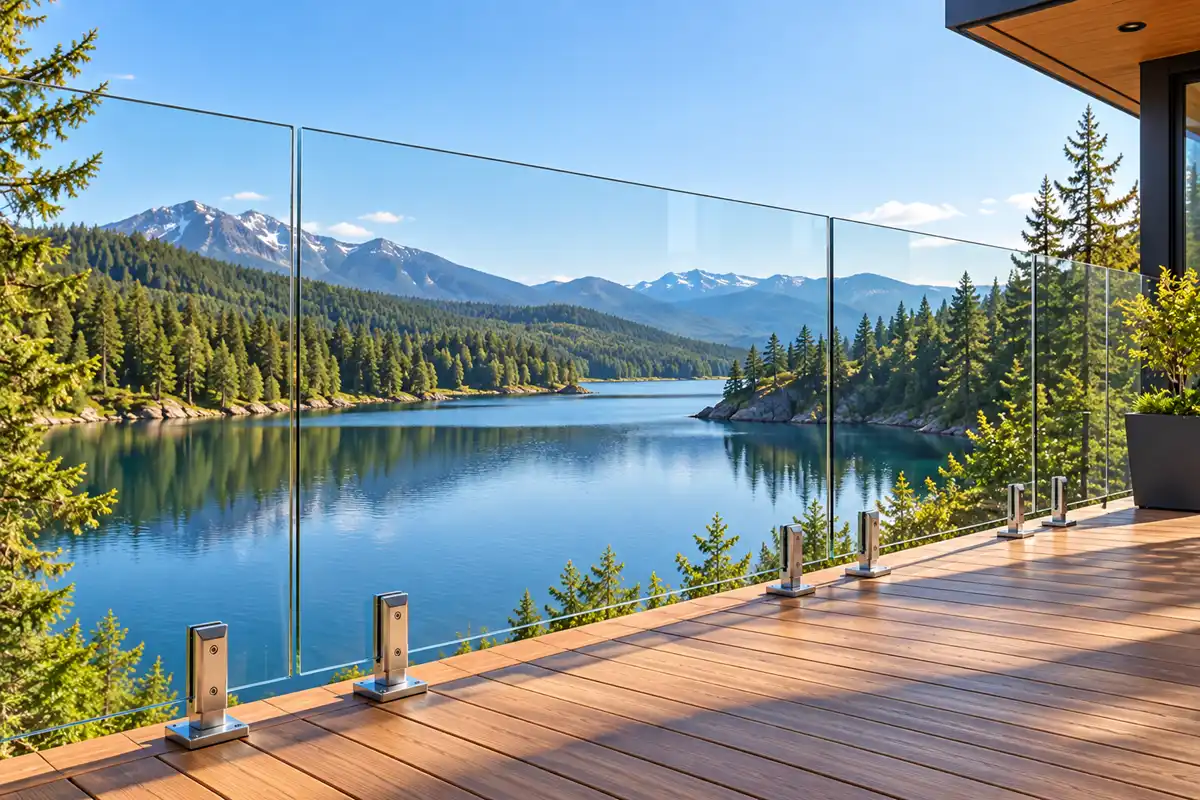
Spigots are short, strong posts that grip the glass at the base. They mount on top of the deck or on the side of the fascia. A side mount glass spigot frees up floor space and gives a clean edge.
This is the most popular frameless glass deck railing style. It looks minimal, and it installs faster than a base shoe. Most spigot systems use 12 mm tempered or laminated glass.
Base Shoe Channel Systems
A base shoe is a continuous aluminum or stainless channel. The glass sits inside it, locked with wedges or dry-glaze kits. The result is a true “floating glass” look.
Base shoes cost more, and they need a solid structure below. Moreover, the channel must drain well, because trapped water can freeze and push on the glass. A good glass railing end cap channel finishes the ends neatly and keeps debris out.
Post and Clamp Systems
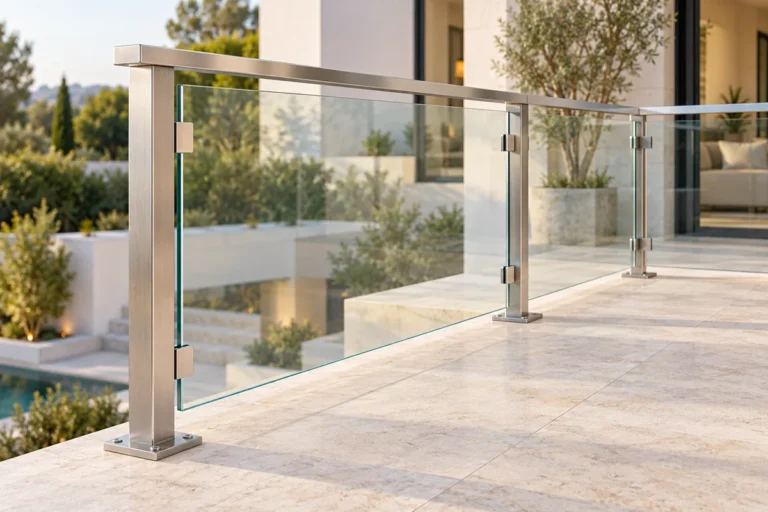
Here, stainless posts carry the load, and glass clamps and connectors hold each panel. This is often the most budget-friendly glass deck railing in Canada.
Because the posts share the load, thinner glass (often 8–10 mm tempered) may work. Also, a top handrail usually ties the posts together. For more detail, see our guide to types of glass clamps for railings and how to choose glass railing clamps.
Standoff (Side-Mount Pin) Systems
Standoffs bolt through the glass into the deck fascia. They look modern and keep the deck floor completely clear. An adjustable glass railing standoff helps installers correct small gaps in the framing.
Standoffs suit decks with strong rim joists or concrete edges. However, they need precise drilling and good blocking behind the fascia.
Quick Comparison Table
| System | Look | Typical Glass | Relative Cost | Install Difficulty | Best For |
|---|---|---|---|---|---|
| Frameless spigot | Minimal, open | 12 mm tempered / laminated | Medium–High | Medium | Modern homes, pool decks |
| Base shoe channel | Fully frameless | 12–17.52 mm laminated | High | High | Premium projects, commercial |
| Post and clamp | Structured, classic | 8–10 mm tempered | Low–Medium | Low | Budget builds, retrofits |
| Standoff | Clean fascia mount | 12 mm tempered / laminated | Medium–High | Medium–High | Small decks, balconies |
Materials and Technical Details That Matter in Canada
304 vs 316 Stainless Steel for Outdoor Glass Railing
This is the most important hardware decision for Canadian decks. Both grades look similar when new. But they age very differently.
304 stainless steel works well indoors and in dry, inland areas. Yet it can show brown “tea staining” when exposed to salt.
316 stainless steel adds molybdenum, which improves corrosion resistance. Because of this, it handles road salt, pool water, and sea air far better.
| Grade | Corrosion Resistance | Best Use in Canada | Cost |
|---|---|---|---|
| 304 | Good | Indoor, sheltered decks, dry inland areas | Lower |
| 316 | Very good | Most outdoor decks, pools, salted areas | Medium |
| 2205 Duplex | Excellent | Oceanfront BC and Atlantic Canada sites | Higher |
So which grade is best for coastal areas? For coastal British Columbia, Nova Scotia, or near highways with heavy salting, choose 316 at minimum. UNIKIM offers AISI304 and AISI316 glass railing wall standoffs so buyers can match grade to site.
Glass Type and Thickness
Guards must use safety glass. The two common types are:
- Tempered glass: strong, and breaks into small, blunt pieces
- Laminated glass: two tempered layers bonded with an interlayer, so it stays in place if cracked
Many projects now use heat-soaked tempered or laminated glass. Heat soaking reduces the risk of spontaneous breakage from tiny impurities. In addition, laminated glass is the safer choice for frameless systems without a top rail.
Finishes That Last
Finish affects both looks and rust resistance.
- Mirror polish: the smoothest surface, so salt and dirt cling less
- Satin (brushed): softer look, but needs more frequent cleaning near salt
- Matte black powder coat: very popular in modern Canadian homes
Handrails and End Caps
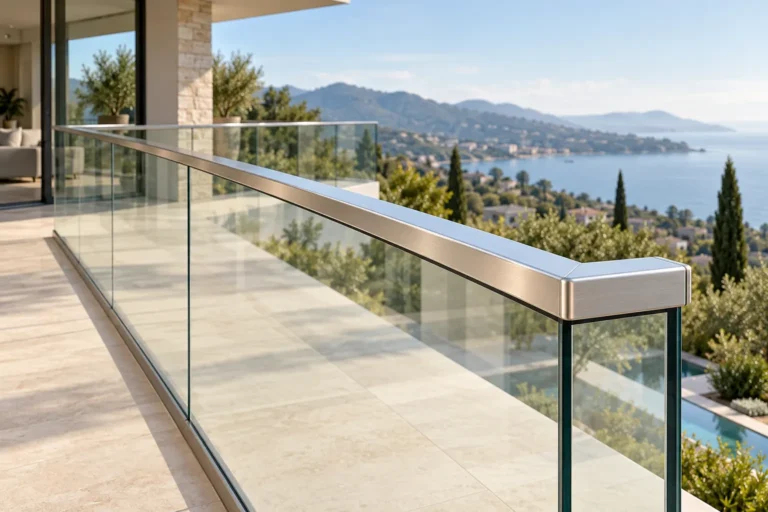
A top rail adds strength and a safe grip. Also, if a panel ever breaks, the rail keeps the guard line in place. Stainless railing end caps seal tube ends against water, which matters in freeze-thaw climates.
Canadian Building Code Basics for Glass Deck Railings
Codes vary by province and city. Therefore, always confirm details with your local building department. Still, most rules follow the National Building Code of Canada.
Here are the common points for residential decks:
- When a guard is required: generally when the deck is more than 600 mm (about 24 in) above the ground.
- Guard height: usually at least 900 mm (about 36 in) for decks of a single home up to 1,800 mm above grade. Higher decks and most other buildings typically need 1,070 mm (about 42 in).
- Openings: gaps must not let a 100 mm (about 4 in) sphere pass through.
- Climbability: designs should not offer easy footholds for children.
- Load resistance: the guard must resist set loads at the top and across the panels.
Some provinces add their own rules. For example, Ontario has specific requirements for glass in guards. So check your provincial code, and ask your supplier for load test data.
How Much Does Glass Deck Railing Cost in Canada?
Costs depend on the system, glass, hardware grade, and local labour. The ranges below are rough market estimates for installed railings. Treat them as a starting point, not a quote.
| System | Approx. Installed Cost (CAD per linear foot) |
|---|---|
| Post and clamp | $150 – $300 |
| Frameless spigot | $300 – $600 |
| Standoff | $300 – $550 |
| Base shoe channel | $350 – $650+ |
What pushes the price up?
- Laminated or heat-soaked glass
- 316 or duplex stainless instead of 304
- Many corners, stairs, or custom angles
- Hard site access or high decks
- Remote locations with higher freight costs
How to save money: Contractors and distributors often cut hardware costs by buying factory-direct. That is one reason many Canadian importers source from a glass railing systems supplier like UNIKIM.
How Glass Railing Hardware Is Made
Knowing the process helps you judge supplier quality. At UNIKIM, hardware typically goes through these steps:
- Drawing review: We confirm glass size, load, mounting type, and finish.
- Material check: Steel grade is verified before production starts.
- Forming: Parts are made by precision casting or CNC machining for tight tolerances.
- Polishing: Mirror or satin finishing smooths the surface.
- Passivation: A chemical treatment strengthens the steel’s natural protective layer.
- Testing: Samples go through salt spray and load checks.
- Packing: Parts are protected for long export shipping.
Ask any supplier to explain these steps. If they cannot, that is a warning sign. You can learn more in our glass railing manufacturer guide.
Installation Tips for Canadian Decks
Even great hardware fails when installed poorly. Keep these tips in mind:
- Add solid blocking. Wood decks need blocking behind spigots and standoffs to carry the load.
- Use the right anchors. For concrete, use chemical (epoxy) anchors rated for outdoor use.
- Plan for drainage. Base shoes need weep holes, so water drains before it freezes.
- Watch the temperature. Grout and epoxy may not cure properly in freezing weather.
- Keep gaps even. Consistent panel gaps look better and allow for movement.
- Protect the glass. Keep metal tools and snow shovels away from glass edges.
For common errors, read our article on railing hardware installation mistakes. You can also watch install demos on the UNIKIM YouTube channel.
Buying Guide: How to Choose the Right System
Use this checklist before you order:
- Measure the deck height. This sets your guard height and code needs.
- Check the substrate. Wood, concrete, and steel each need different mounting.
- Assess exposure. Salt, pools, or ocean air mean 316 or duplex hardware.
- Choose the look. Frameless for views, post and clamp for budget.
- Pick the glass. Laminated is safer for frameless designs.
- Ask for test data. Request load and salt spray results.
- Confirm lead time. Order early for spring and summer deck season.
Working on a balcony instead? Our glass balcony railing hardware buyer’s guide covers glass balcony railing in Canada and beyond.
Why Choose UNIKIM for Glass Railing Systems
UNIKIM designs and manufactures stainless steel railing hardware for global buyers. Here is what that means for Canadian projects:
- Factory-direct pricing for contractors, distributors, and importers
- 304, 316, and duplex options matched to site conditions
- Full system range, from spigots and clamps to standoffs and frameless glass railing systems
- Custom finishes, including mirror, satin, and matte black
- OEM and private label support for distributors
- Technical help with drawings and product selection
You can also browse our catalog on the UNIKIM Made-in-China store. Ready to price a project? Contact the UNIKIM team with your drawings and quantities.
FAQ
1. What is the best glass railing for decks in Canada?
For most homes, a frameless spigot system with 316 stainless hardware works best. It offers open views and resists salt and moisture. However, post and clamp systems suit tighter budgets.
2. How high must glass railing for decks in Canada be?
Most codes require at least 900 mm (36 in) for single-home decks up to 1,800 mm above grade. Higher decks usually need 1,070 mm (42 in). Always confirm with your local building department.
3. Should I use 304 or 316 stainless steel for glass railing for decks in Canada?
Choose 316 for most outdoor decks. Road salt, pools, and coastal air can stain 304 quickly. For oceanfront sites, consider duplex 2205.
4. How much does glass railing for decks in Canada cost?
Installed prices often range from about $150 to over $650 CAD per linear foot. The system type, glass, hardware grade, and labour drive the final cost. Buying hardware factory-direct can lower the total.
Summary
Glass railing gives Canadian decks open views, wind protection, and low upkeep. Yet the climate demands careful choices. Salt, snow, and freeze-thaw cycles punish weak hardware and poor installs.
So start with code height and mounting surface. Then choose 316 or duplex stainless for exposed sites, and laminated glass for frameless designs. Finally, work with a supplier who can show real test data.
UNIKIM builds railing hardware for exactly these conditions, with factory-direct pricing and full technical support. If you are planning glass railing for decks in Canada, send your project details to UNIKIM for a fast, accurate quote.